 dennis
The 2000s gave us low-rise jeans, velour tracksuits, butterfly clips, and enough bedazzled everything to blind a small stadium. Now, more than two decades later, Y2K fashion is back in full force, reimagined through a 2026 lens that prioritizes body inclusivity, sustainable sourcing, and personal expression over rigid trend adherence. Whether you lived through the era or discovered it through social media archives, understanding these iconic aesthetics helps you cherry-pick the pieces that work for your style today without falling into the trap of costume dressing.
This resurgence isn’t simple nostalgia. The 2000s aesthetic offers a counterpoint to the minimalism that dominated the 2010s, celebrating maximalism, color, and unapologetic femininity (or subversion of it). But the fashion landscape has evolved. Today’s approach to Y2K style means pairing cargo pants with thrifted finds, choosing ethically made baby tees over fast fashion replicas, and adapting trends to fit diverse body types rather than conforming to the size-exclusive ideals that defined the original era.
This guide breaks down the defining trends of 2000s fashion, from denim-on-denim looks to the prevalence of logomania, and shows you how to incorporate these elements into your wardrobe with intention. You’ll find practical sourcing strategies that align with ethical fashion values, styling tips that work across different body types and gender expressions, and honest context about which trends translate well today and which ones deserve to stay in the past.
The Iconic Looks That Defined 2000’s Fashion
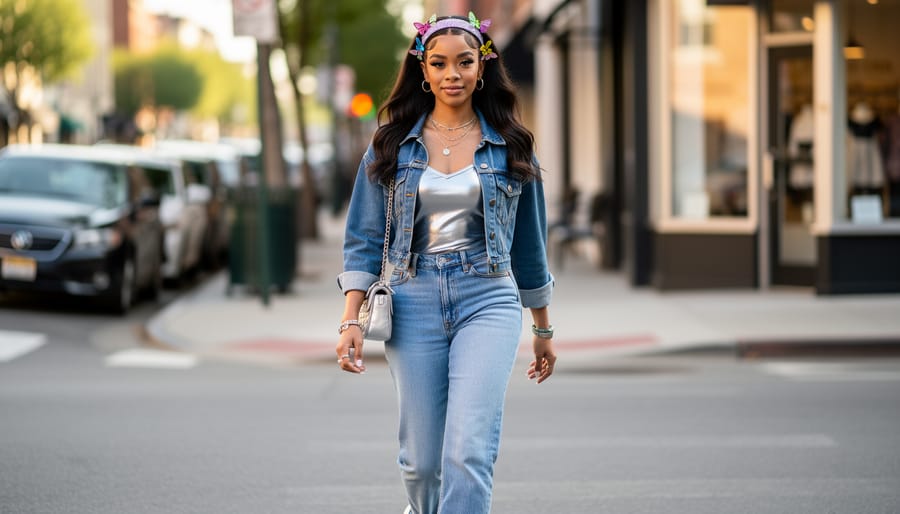
Low-rise jeans sat at the hips, paired with visible thong straps and cropped baby tees that left nothing to the imagination. This wasn’t just a silhouette, it was a statement about confidence and body display that defined the early 2000’s. Velour tracksuits in bubblegum pink and baby blue became the uniform of choice, whether you were running errands or walking red carpets. These matching sets, often emblazoned with rhinestone logos across the backside, embodied the era’s love of casual glamour.
Cargo pants brought utilitarian edge with their multiple pockets and parachute-style fabric, typically worn low on the hips with chunky sneakers. The functional design merged with fashion in a way that felt refreshingly unpretentious. Butterfly clips scattered through hair, trucker hats worn ironically, and stacks of rubber bracelets added playful accessories that required zero styling expertise.
Layering became an art form. Tank tops stacked three deep in contrasting colors, worn under shrunken cardigans or zip-up hoodies. Logo-heavy pieces from brands like Von Dutch, Ed Hardy, and Juicy Couture turned bodies into walking advertisements, celebrating conspicuous branding in a way that feels almost alien to today’s quiet luxury movement. Metallic fabrics, silver puffers, holographic bags, iridescent eyeshadow, reflected the millennium’s obsession with futuristic optimism.
What made these pieces culturally significant was their democratization of celebrity style. You could recreate looks from music videos and magazines with accessible mall brands. The aesthetic was aspirational yet attainable, even if the original versions often stopped at size 12 and leaned heavily into narrow beauty standards.
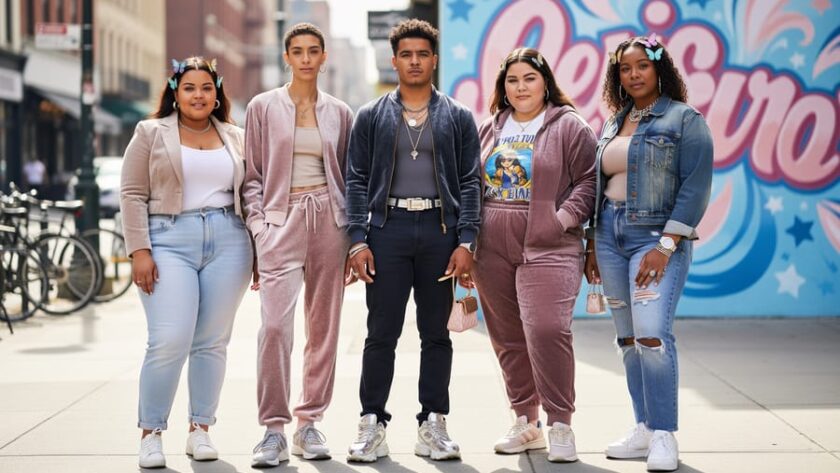
In 2026, the reinterpretation looks different. Brands reviving these trends now offer extended size ranges, with low-rise options that don’t assume a single body type. Velour tracksuits come from manufacturers committed to fair labor practices rather than fast fashion factories. Vintage cargo pants get thrifted and tailored, reducing waste while honoring the original silhouette. The metallics and logos return, but often through small ethical brands or secondhand platforms where each piece carries history rather than environmental cost.
This evolution allows the joy of Y2K aesthetics without replicating the exclusions that limited who could participate the first time around.
How 2000’s Aesthetics Evolved Beyond Their Origins
The original 2000’s fashion landscape wasn’t designed for everyone. Brands predominantly offered limited size ranges, marketing campaigns centered on a narrow beauty ideal, and many trends were rigidly gendered. If you didn’t fit within those boundaries, whether by body type, gender expression, or cultural background, participating in Y2K style often meant forcing yourself into clothes that weren’t made with you in mind.
Today’s revival tells a different story. Independent designers and established brands alike are reinterpreting low-rise jeans with extended sizing, creating cargo pants that work across the gender spectrum, and producing velour tracksuits that celebrate curves rather than hiding them. This shift reflects broader changes in how we understand fashion as a form of self-expression rather than conformity.
The growth of secondhand marketplaces has also democratized access to authentic vintage pieces, while upcycling in fashion allows creators to reimagine original 2000’s garments with modern fits and sustainable practices. You’ll find plus-size influencers styling butterfly clips alongside tailored blazers, non-binary fashion enthusiasts layering vintage band tees over slip dresses, and people of all cultural backgrounds claiming space in an aesthetic that once felt gatekept.
What makes this moment significant isn’t just nostalgia, it’s correction. The revival acknowledges what the original era got wrong and actively works to make Y2K style genuinely accessible. Fashion shows and cultural events in 2026 are featuring models who represent the full spectrum of human bodies and identities, proving that these trends belong to anyone who wants to wear them. That inclusive approach transforms 2000’s fashion from a narrow trend into a broader movement about self-expression without apology.
Where to Find Ethical and Inclusive Y2K Pieces in 2026
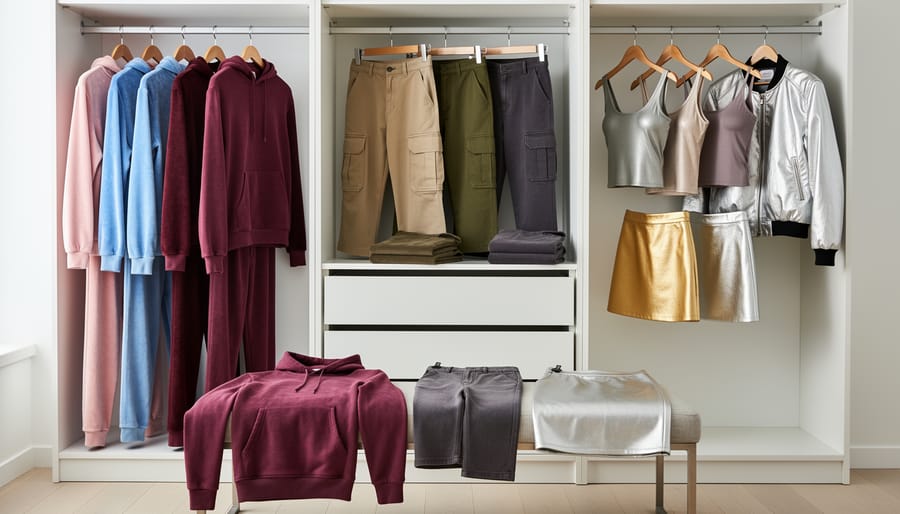
Finding authentic Y2K pieces that align with your values takes more intention than scrolling fast fashion sites, but the payoff is worth it. The resale market has become a primary destination for 2000’s fashion, with platforms like Depop, Poshmark, and Vinted hosting extensive collections of genuine era pieces. These marketplaces connect you directly with sellers, many of whom provide detailed photos and measurements that help you assess fit before buying.
When shopping secondhand, examine listings carefully. Real vintage denim from the era often shows specific construction details: thick topstitching, heavier fabric weight than modern reproductions, and branded hardware. Check for authentic tags and labels, though remember that original Y2K pieces weren’t typically made in inclusive size ranges, so alterations may be necessary. Local vintage shops offer the advantage of trying pieces on and speaking with knowledgeable staff who can verify authenticity and suggest styling approaches.
Several contemporary brands are producing 2000’s-inspired collections with ethical manufacturing and extended sizing that the original era lacked. Look for transparency markers: detailed information about where and how garments are made, living wages for workers, and clear sustainability commitments beyond vague marketing language. Brands that publish factory names, share third-party certifications, and provide specific material sourcing information demonstrate genuine accountability.
Thrift stores remain underrated sources for Y2K staples at accessible price points. Cargo pants, graphic tees, and accessories like chunky belts frequently surface in rotation. The hunt requires patience, but discovering a genuine piece for under ten dollars while keeping textiles out of landfills satisfies both budget and environmental concerns.
Building a Y2K-inspired wardrobe through these channels means your style supports circular fashion systems rather than disposable trend cycles. Each piece carries its own history while contributing to a more equitable fashion future.
Styling 2000’s Fashion for Your Unique Identity
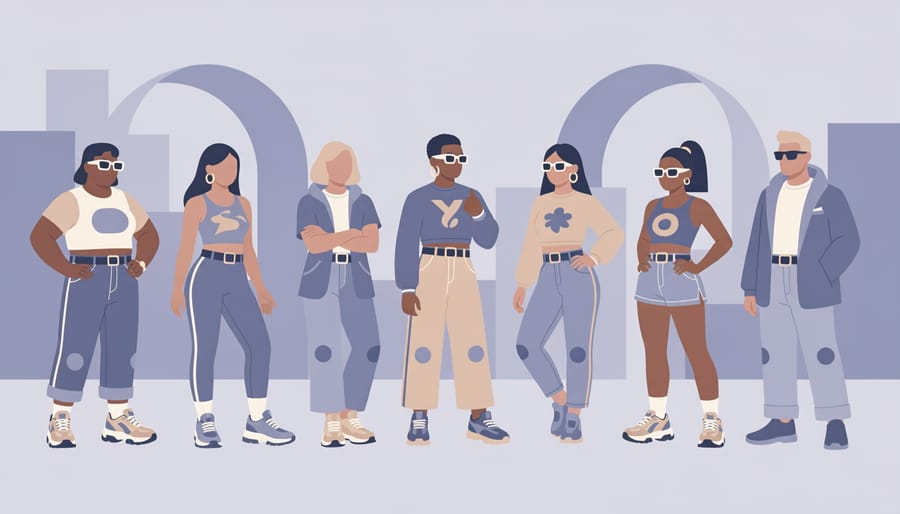
The secret to making 2000’s fashion feel like yours instead of a costume is treating each piece as a starting point, not a rulebook. Cherry-pick the elements that genuinely excite you and leave the rest behind. If baby tees make you feel playful but low-rise jeans don’t serve your comfort or confidence, swap them for high-waisted styles with Y2K details like contrast stitching or cargo pockets.
Ground your Y2K pieces with contemporary basics to create balance. A velour hoodie pairs beautifully with tailored trousers and minimalist sneakers. Cargo pants work alongside a fitted turtleneck and structured blazer. This approach to dressing the craft of personal style means you control the proportions and the narrative, mixing eras in ways that photograph well and feel comfortable for your daily life.
Adapt silhouettes to honor your shape and preferences. If the original micro-mini doesn’t feel right, try a midi skirt in metallic fabric or butterfly-print instead. Love the energy of logo tees but prefer coverage? Size up and knot at the hip, or layer over a long-sleeve mesh top. Accessorize with intention: chunky platforms add drama, but sleek ankle boots keep the look grounded. Tiny sunglasses and butterfly clips are optional accents, not requirements.
Color and texture offer another avenue for personalization. You don’t need to commit to head-to-toe pink velour to participate in this aesthetic. A single statement piece in a bold Y2K hue or shimmery fabric, surrounded by neutrals in cuts you already love, signals the trend without overwhelming your existing wardrobe. The same logic applies to logos and graphics: one eye-catching piece per outfit typically reads as intentional rather than excessive.
Confidence comes from feeling like an enhanced version of yourself, not someone else’s vision of the era. Experiment in front of a mirror, take photos, and notice what makes you stand taller. Trust your instincts over arbitrary trend rules. The 2026 revival of 2000’s fashion succeeds precisely because it invites individual interpretation across all identities and body types, making space for everyone to find their own entry point into this joyful, expressive aesthetic.
The Cultural Moment Behind the 2000’s Fashion Revival
The 2000’s fashion revival isn’t happening by accident. Gen Z discovered an era they never lived through via social media platforms, where hashtags dedicated to Y2K aesthetics rack up billions of views. Meanwhile, millennials who actually wore butterfly clips and cargo pants the first time around are revisiting these pieces with fresh perspective and purchasing power. Both groups are finding something current minimalism couldn’t deliver: permission to be loud, playful, and unapologetically decorative.
Social media created the perfect conditions for this resurgence. Platforms reward visual boldness, and nothing photographs quite like metallics, vibrant colors, and statement accessories. Influencers across size ranges and style identities have demonstrated that Y2K pieces work for everyone when styled with intention. The trend spread through genuine enthusiasm rather than top fashion brand campaigns, giving it grassroots authenticity that feels participatory instead of prescribed.
Cultural events are now celebrating this aesthetic openly. The Canada Lifestyle Exhibition & Fashion Show 2026, curated by The World in Vogue in collaboration with RMD, is bringing fashion shows to Calgary on June 20 and an exhibition to Edmonton on June 21, demonstrating institutional recognition of diverse style movements. Even darker aesthetics are intersecting with Y2K revival, as seen in fashionable horror content that blends early-2000s teen culture with contemporary edge.
The timing makes sense. After years dominated by neutral palettes and quiet luxury, people crave color, texture, and joy. The 2000’s offered exactly that, and this revival lets us reclaim those elements while leaving behind the era’s limitations.
The 2000’s fashion revival isn’t just about reliving the past, it’s about reclaiming an aesthetic and making it work for who you are right now. Whether you remember wearing butterfly clips to middle school or discovered Y2K style through social media, this trend belongs to anyone who wants to play with it. The difference between then and now is that today’s interpretation leaves room for every body, every identity, every personal story to show up authentically.
Start with one piece that genuinely excites you. Maybe it’s a pair of cargo pants that finally comes in your size, or a vintage velour hoodie you found at a local thrift shop. Build from there, mixing eras and influences until you land on something that feels like yours rather than a replica of someone else’s memory. The best part of this moment is that there’s no single right way to wear 2000’s fashion, just your way.
If you’re looking to see how others are reimagining these looks, events celebrating diverse fashion perspectives continue to pop up across the country. Fashion has always been about experimenting, taking risks, and finding joy in self-expression. This trend gives you permission to do exactly that.