 dennis
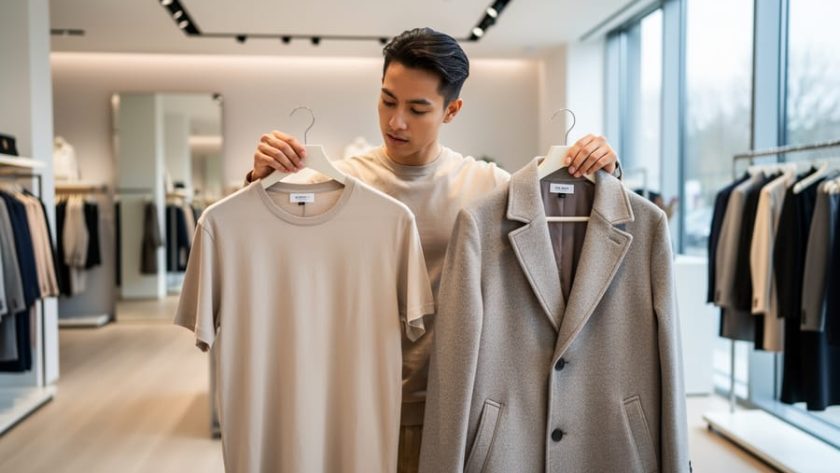
Transparent pricing means a brand shows you how it arrives at the price on the tag. Materials, labor, transport, duties, and the company’s own markup are laid out in plain view instead of tucked behind a single number. There’s no universal price for it, because costs shift with the brand’s model and the garment itself. A basic cotton tee and a tailored wool coat will break down very differently, and so will a small made-to-order label and a mass-market chain.
A few things move the number most. Fabric choice and quality set the foundation, since organic or recycled fibers often cost more to source than conventional ones. Fair wages and safe working conditions add real cost, and they should. Production size matters too: smaller runs usually mean higher costs per piece. Then come shipping, import taxes, and how much margin the brand keeps.
Why does it matter? Because a price you can read is a price you can judge. You can see whether a higher tag reflects better materials and fairer pay, or just a bigger markup. That clarity helps shoppers of every size, style, and budget spend with confidence, and it rewards the brands doing the work openly.
Any figures in this guide are general and illustrative, meant to help you understand the patterns rather than quote exact costs. Let’s break down what you pay, where the money goes, and how you can check the story behind a price yourself.
Transparent Pricing Meaning, in Plain Language
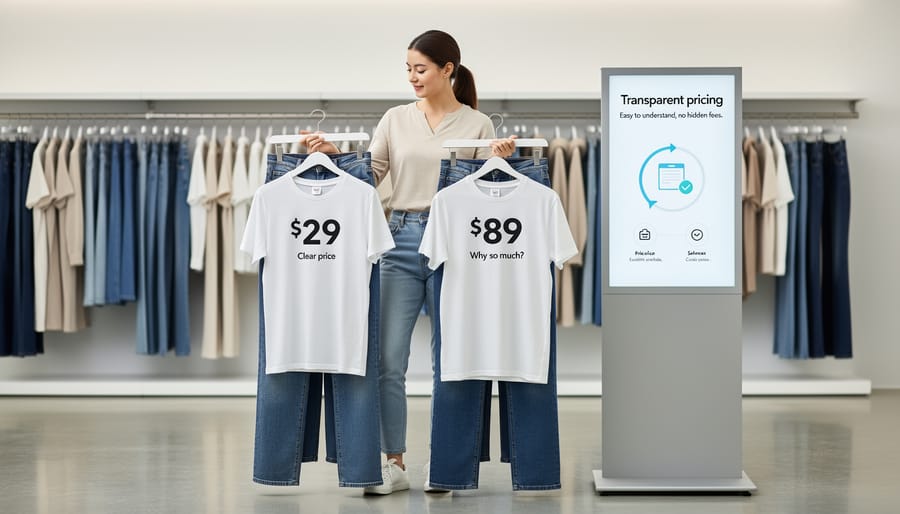
Transparent pricing means a brand shows you how it arrives at the price, not just the price itself. Think of it as the difference between being handed a receipt and being told “trust us, that’s fair.” When a brand practices real transparency, you can see what goes into the cost: the fabric, the people who made it, the shipping, and the margin the brand keeps. Our guide to transparency in pricing goes deeper on what brands pay behind the scenes.
It helps to see how this differs from the pricing you probably run into most often.
Ordinary pricing gives you a number and nothing else. You decide whether it feels right based on gut instinct, brand reputation, or what the shop next door charges.
Sale pricing adds a crossed-out “original” price and a bright percentage. It feels like information, but it often tells you very little. If the original price was never really charged, the “deal” is just a story.
Vague value claims like “premium quality” or “ethically priced” sound reassuring, yet they don’t give you anything to check. They ask for your trust without earning it.
Transparent pricing swaps all of that for specifics you can actually weigh up.
Why does this matter? Because everyone deserves to feel respected at checkout. Whether you’re shopping on a tight budget, building a wardrobe in a size that mainstream brands often overlook, or investing in a piece you’ll wear for a decade, you shouldn’t have to guess whether you’re being treated fairly. Clear pricing puts the same information in every shopper’s hands, no matter who they are. It turns buying clothes from a leap of faith into a choice you feel good about.
What You Pay: Cost by Garment Type and Brand Model
The same white tee can land at very different prices depending on who sells it. Think of the tag as the end of a story: the brand model sets the plot, and the garment type shapes the details. Here’s a general, illustrative way to read it. These are not measured market figures, so treat them as a starting point for your own comparison.
| Brand model | Typical price positioning (illustrative) | Pricing detail usually shared | What to look for |
|---|---|---|---|
| Fast fashion | Lowest tags, often with frequent markdowns | Usually just the price | Fabric content and care labels |
| Mid-market | Moderate, with regular promotions | Limited, mostly sale pricing | Consistency of “original” prices |
| Direct-to-consumer | Moderate to higher, fewer middlemen | Sometimes a simple cost explainer | Whether claims come with real numbers |
| Independent/ethical label | Higher per piece, smaller batches | Often the most detailed | Published wages, sourcing, and sizing policy |
| Luxury | Highest tags, brand and craft premiums | Rarely a full breakdown | Materials, origin, and repair options |
Garment type matters just as much. Basics like tees and tanks are simple to make, so price gaps there usually come from fabric quality and labor practices. Denim often costs more because of the fabric weight, the washing and finishing, and the extra pattern work that gives different bodies a comfortable fit. Outerwear sits higher still, since it takes more material, linings, and construction. Accessories and beauty or gift items can swing either way, because packaging, brand name, and small-batch sourcing often account for a big share of the price.
That’s why a single “average price” can mislead you. A mid-market jacket and an independent label’s jacket may differ by far more than their tees do.
So skip the blanket numbers and go to the source. Check the brand’s own published figures, whether that’s a cost breakdown, a materials page, or a sourcing note. The brands worth your trust are the ones happy to show their math.
Where the Money Goes: A Cost Breakdown of One Price Tag
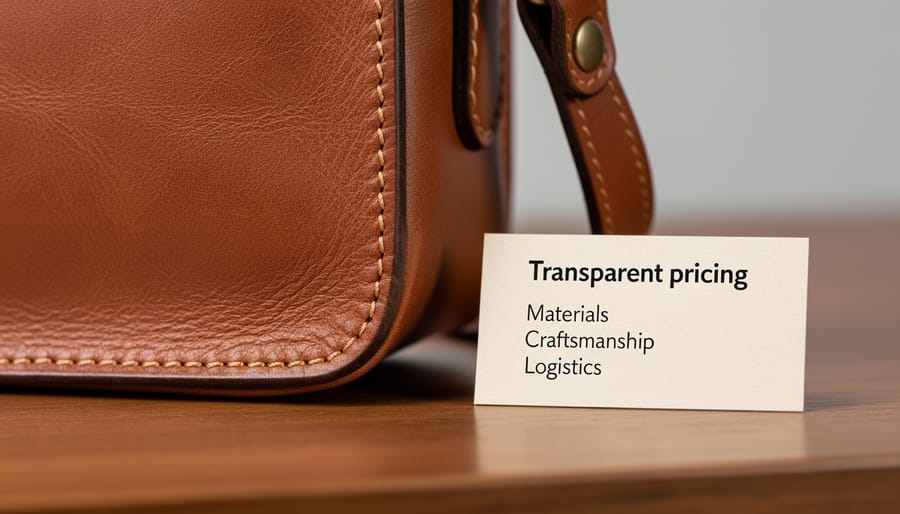
Materials, Makers, and the Real Cost of Fair Wages
Fabric is where the story starts. A tightly woven organic cotton or a responsibly sourced wool costs more per yard than a thin, blended alternative, and that difference shows up in how a piece feels after the tenth wash, not just the first wear.
Then there are the people who turn that fabric into clothing. Fair wages, safe workspaces, and reasonable hours add real cost to every seam. They also mean the person who sewed your jacket can afford to live well, which is worth paying for. When a brand explains this, the higher price stops feeling like a mystery and starts feeling like a choice you understand.
Brands that publish their supplier lists, factory locations, or wage standards are showing you the receipts. You can see who made what, where, and under what conditions. A clear brand ethic turns into practice when it’s backed by details you can check, rather than a vague line about being “responsibly made.”
Look for specifics: named partners, stated wage commitments, and honest notes about what’s still a work in progress. That openness is the heart of transparent pricing.
Markup, Marketing, and the Costs Shoppers Rarely See
Here’s the part of the price tag that tends to stay hidden: everything that happens after the garment is made. Markup is the gap between what it costs a brand to produce something and what it sells for, and that gap has to cover a lot of real work. Advertising, photo shoots, customer service, website upkeep, warehouse space, and payment processing all live there. So do retail partnerships, where a store or platform can take a sizable cut of each sale. And then there are returns, which cost brands money in shipping, handling, and unsellable stock.
None of this is shady on its face. Running a fashion business costs money, and a fair margin helps a brand keep its doors open and pay its team well.
The question is whether a brand will talk about it. Being upfront doesn’t mean handing over supplier contracts or exact negotiated rates. A brand can simply share broad categories, such as roughly how much of the price goes to making the piece versus running the business, or explain why it sells directly instead of through retailers. Plain language about where the money goes builds trust without revealing any secrets.
What Pushes a Price Up or Down: Key Price Factors
Price tags move for plenty of reasons, and most of them are ordinary. Knowing them helps you tell a fair price from a vague one.
Fabric and fiber come first. Organic cotton, recycled fibers, and fine wool usually cost a brand more than basic blends, and a heavier knit simply uses more material. Production size matters too. A small independent label making a limited run pays more per piece than a giant factory order, which is why small batches often carry a higher tag.
Design complexity adds up quietly. Extra seams, linings, hardware, and detailed finishing mean more hands and more time. Where a garment is made shifts costs as well, since labor rates, shipping distance, and duties all play a part. Certifications can add fees for audits and testing, though they also give you something checkable to hold a brand to.
Then there’s timing. Seasonal collections, end-of-season markdowns, and big sales cycles can swing the price of the same item over a few months. That’s why a “was/now” price only tells you something if the brand explains what the original number was based on.
Sizing deserves an honest word. Extended ranges can mean more fabric and extra pattern-making, because bodies aren’t just scaled-up versions of one another and good fit takes real design work. That’s a craft question, not a flaw in anyone’s body. Many brands charge the same across every size, and they deserve real credit for it.
Keep that in mind as you compare tags. Clear reasoning beats a flashy discount every time.
Red Flags and Green Flags: Spotting Honest Pricing While You Shop
A Quick Checklist Before You Buy
Before you hit “add to cart,” take two minutes to run through a simple routine. It works whether you’re browsing a tiny independent label or a big-name store, and it keeps you in control of the decision.
- Find the brand’s materials and sourcing page, and check that it names fabrics, factories, or regions instead of just saying “ethically made.”
- Look for a price breakdown or a plain explanation of why this item costs what it does.
- Compare the “original” price with what the brand charged recently. A permanent “sale” is a warning sign.
- Check whether the price stays the same across sizes, since extended sizing shouldn’t cost extra.
- Scan for shipping, duties, and return fees before checkout, not after.
- Do the cost-per-wear math: divide the price by how many times you realistically see yourself wearing it.
If most answers feel clear and consistent, you’re likely dealing with a brand that respects you. If a few come up empty, that’s useful information too. Ask the brand directly, because honest ones are usually glad to answer.
Doing the Math Yourself vs. Trusting the Brand: DIY Research or Pro Tools
You can learn a lot about a price tag with nothing more than a calculator and a little curiosity. Price-per-wear math is the easiest start: divide the cost by how many times you realistically expect to wear a piece. A $120 jacket worn 60 times costs $2 a wear, while a $30 top that falls apart after five outings costs $6. Reading the fabric label and comparing fibers across similar items helps too.
But DIY estimates have limits. You can’t see a brand’s wage records or factory costs from a hangtag, so your math shows value for you, not honesty from them. That’s where outside sources come in. Brand-published breakdowns, third-party ethical ratings, and trusted editorial reviews fill the gaps, and a quick look at some fashion inspiration can even point you toward people and labels worth researching.
| Approach | Effort | Reliability | Best use |
|---|---|---|---|
| DIY math and label reading | Low to moderate | Good for value, weak on ethics | Comparing cost per wear and fabric quality |
| Brand-published breakdowns | Low | Strong if detailed, but self-reported | Seeing how one brand explains its price |
| Third-party ratings and editorial reviews | Moderate | Higher, since claims are checked independently | Verifying sourcing and labor promises |
The sweet spot is using both. Do your own math, then check the brand’s claims against a source that has no stake in the sale.
Transparent Fashion Pricing FAQs
Does transparent pricing mean cheaper clothes?
Not necessarily. It means you can see why a piece costs what it does, whether that’s $30 or $300. Sometimes that shows you a fair deal, and sometimes it shows you a markup you’d rather skip.
Why do ethical brands often cost more?
Fair wages, better materials, and smaller production runs add real cost to each piece. A brand that explains those choices is giving you the reasoning, not just asking you to trust the tag.
Is a high price proof of quality?
No. Price can reflect fabric and craftsmanship, but it can also reflect marketing and brand hype. Check the materials, construction details, and what the brand actually tells you about how it arrived at the number.
Do all brands have to share a full breakdown?
Generally, no. Sharing is a choice, which is why brands that do deserve a little extra attention. Even partial detail, like sourcing or wage information, is a good sign.
Shopping this way on a tight budget is absolutely possible. Start with the pieces you’ll wear most, do the quick price-per-wear math, and ask brands directly when something isn’t clear. If you’re building a wardrobe for work, our guide to an adaptive professional wardrobe shows how a few well-chosen, well-explained pieces can go a long way. You don’t need a big budget to be an informed shopper, just a few good questions.
Conclusion
Transparent pricing isn’t about judging what you buy or what you can afford. It’s about being able to see the price and understand the reason behind it, so you walk up to the checkout feeling informed instead of guessing. That kind of clarity is for everyone, whatever your size, budget, or style.
So keep asking questions. Where was this made? What went into the price? Does it cost the same across sizes? Brands that answer plainly deserve your attention, and your support tells the rest of the industry that honesty sells.
Clothes should make you feel capable and seen, the kind of pieces that help you wear like armor on the days you need it. When you know what’s behind the tag, that feeling gets stronger.
Ready to shop with that confidence? Explore LOFT PROJECT’s brand features and ethical fashion highlights, and find labels proud to show their work.